

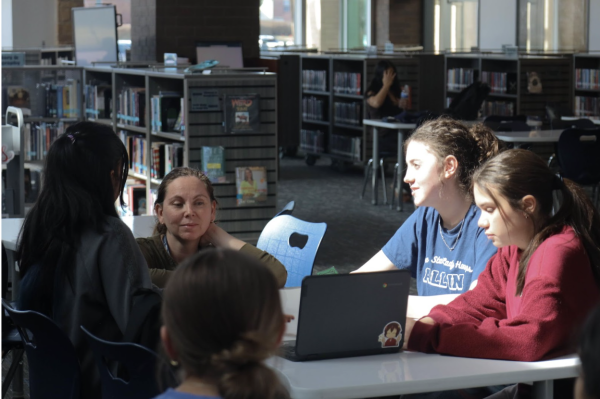
 Biology students presenting their projects in the Lone Star Library on Feb.18, 2026.
Tori Walker/Staff Photographer
Zombie apocalypse survival labs transformed the library as biology students took part in an interactive project on Feb. 18.
Students were divided into groups and challenged to survive a fictional outbreak caused by a zombie virus. To do so, they had to create their own mRNA vaccine.
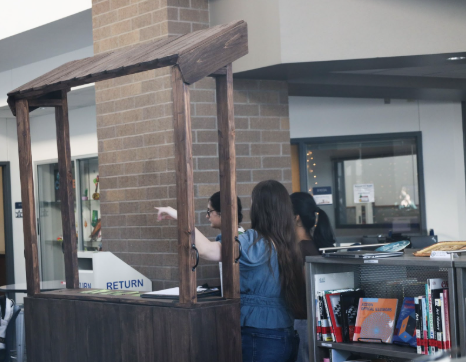 |
| Biology teacher Sara Ditter discussing the project with students during class. Tori Walker/Staff Photographer |
“These interactive real-world scenario projects are important for students because they introduce real-life concepts that affect scientists every day,” biology teacher Sarah Ditter said. “The mRNA vaccine that students were tasked with creating is a type of vaccine similar to the ones developed during the COVID-19 outbreak in 2020.”
To prepare for the project, students completed a “Know and Need-to-Know” chart to reflect on their prior knowledge to identify what they need to learn before pitching their proposals. From there, they worked through a series of tasks designed to help develop their ideas so the project could be carried out successfully.
“Our team had to design the storyline and structure the checkpoints so that each part of the project aligned with the genetic standards we were learning in the unit,” science instructional coach and biology teacher Kyra Slater said. “Students are assigned roles and move through stages where they research, design, and revise their work. We also built in teacher conferences at each checkpoint so students could receive feedback and make improvements before moving forward.”
Students also created a superfood that would help humans survive the zombie apocalypse, teaching them about nutrition while also adding a creative element.
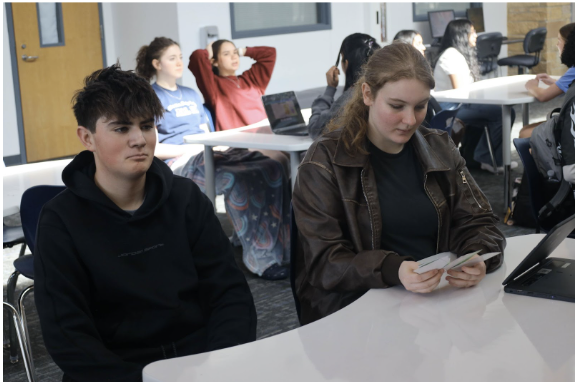 |
| Freshman Caiden Jaggers works with classmates to see if they have enough money to survive the apocalypse. Tori Walker/Staff Photographer |
“My favorite part of the project was probably getting to create my superfood because it allowed me to add some creativity to a subject I usually don’t enjoy that much,” freshman Caiden Jaggers said. “I was also lucky enough to work with people I already enjoy being around that contributed just as much as I did for the project. It also provided a proper challenge for me, because I usually find advanced biology to be too easy for me.”
After researching and developing their ideas, students presented their products to classmates and teachers. Participants walked from table to table, investing fake money in the proposals they believed would be the most effective. Teams that earned enough funding would survive the simulated zombie apocalypse, reinforcing lessons in argument and communication.
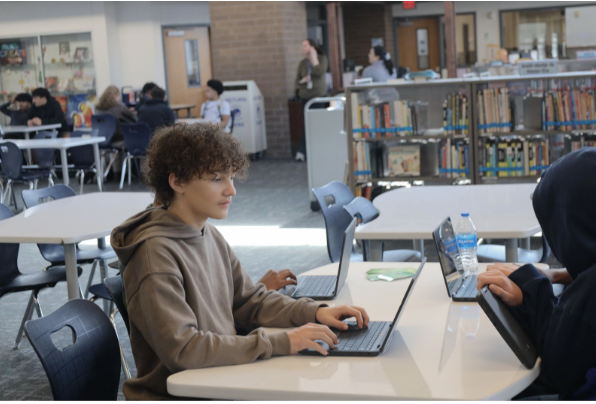 |
| Freshman Evan Winchester collaborates with his groupmates during the zombie biology lab project. Tori Walker/Staff Photographer |
“Because of this project, I now try to explain the topic to someone else,” freshman Evan Winchester said. “This makes me a better thinker because it enables me to have a better understanding of what we’re learning instead of simply memorizing concepts.”
Instead of a standardized test, participants demonstrated their knowledge on the topic and learned how to communicate effectively.
“One thing that I learned from this project that I can’t learn from a test is collaboration,” Jaggers said. “I may have already been friends with most of my project partners, but that doesn’t always mean I can work with them properly. However, we worked together to create our project, and I learned to not be afraid to communicate with project partners.”
 |
The ultimate goal of the project wasn’t just to master biology – it was to create excitement for learning outside of the classroom.
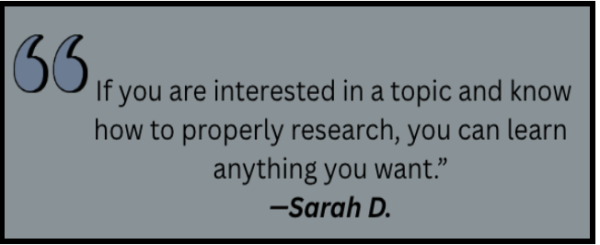
“I hope this project encourages students’ curiosity,” Ditter said. “You do not have to be at school to learn. If you are interested in a topic and know how to properly research, you can learn anything you want.”